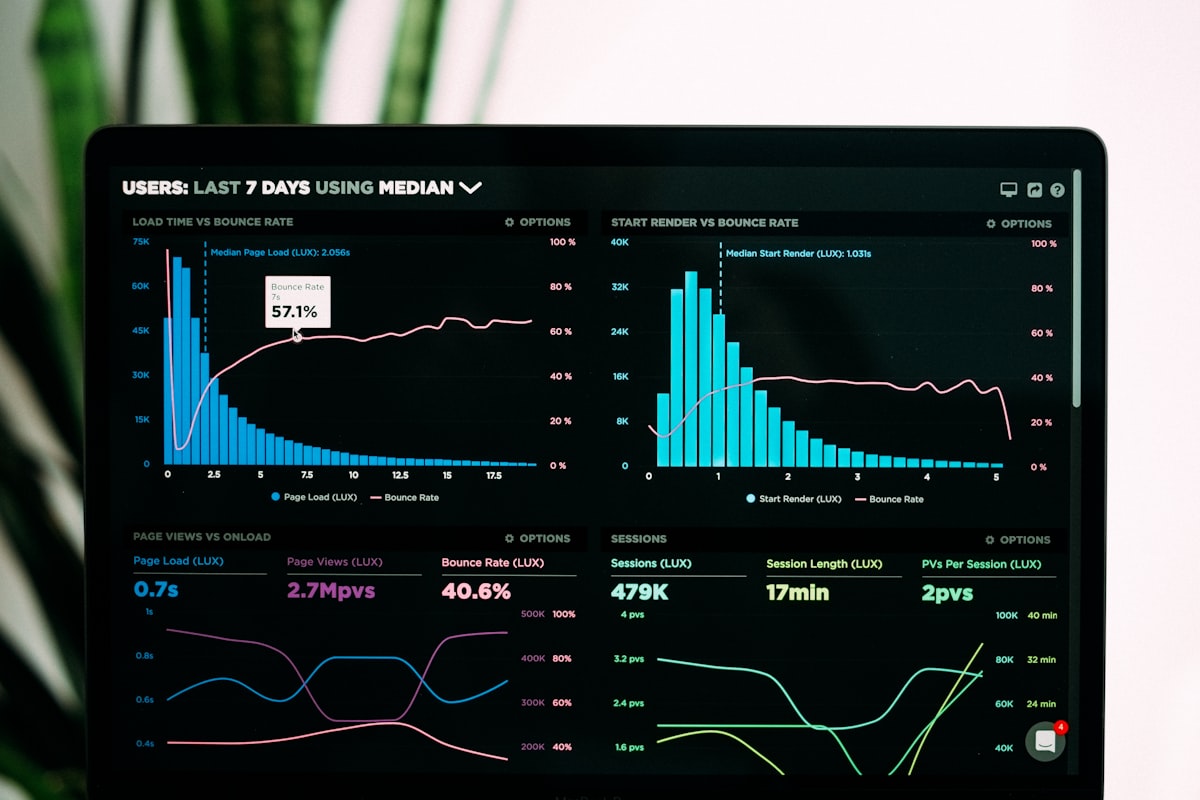
In the competitive digital landscape of 2025, Core Web Vitals have become non-negotiable ranking factors that directly impact your Google search visibility, user experience, and conversion rates.
This comprehensive guide covers everything you need to know about optimizing Core Web Vitals in 2025, with actionable strategies, code examples, and real-world case studies to help you achieve top rankings in Google search results.
What Are Core Web Vitals?
Core Web Vitals are a set of specific metrics that Google considers essential for a good user experience on the web. They measure loading performance, interactivity, and visual stability of web pages.
LCP
Largest Contentful Paint
Measures loading performance
FID ? INP
First Input Delay ? Interaction to Next Paint
Measures interactivity
CLS
Cumulative Layout Shift
Measures visual stability
LCP Optimization Strategies for 2025
Largest Contentful Paint measures how long it takes for the largest content element in the viewport to become visible. Here are the most effective optimization strategies for 2025:
1. Optimize Largest Content Elements
Identify and optimize the elements that typically become the LCP candidate:
<img src="hero-image.jpg" alt="Hero">
<!-- After: Optimized hero image -->
<img src="hero-image.webp"
srcset="hero-image-small.webp 480w, hero-image-medium.webp 768w, hero-image-large.webp 1200w"
sizes="(max-width: 600px) 480px, (max-width: 1000px) 768px, 1200px"
alt="Hero"
width="1200"
height="630"
loading="eager"
fetchpriority="high">
2. Implement Resource Hints
Use modern resource hints to prioritize critical resources:
<link rel="preload" href="critical-styles.css" as="style">
<link rel="preload" href="hero-image.webp" as="image" type="image/webp">
<!-- Preconnect to important origins -->
<link rel="preconnect" href="https://fonts.googleapis.com">
<link rel="dns-prefetch" href="https://cdn.example.com">
3. Server-Side Optimizations
Implement server-side rendering and edge caching for dynamic content:
// pages/products/[id].js
export async function getStaticProps({ params }) {
const product = await getProduct(params.id);
return {
props: { product },
// Re-generate page at most once per hour
revalidate: 3600,
};
}
export async function getStaticPaths() {
const products = await getPopularProducts();
const paths = products.map((product) => ({
params: { id: product.id },
}));
return { paths, fallback: 'blocking' };
}
FID & INP Optimization for 2025
With Google transitioning from FID to INP as a Core Web Vital in 2024, it's crucial to optimize both metrics for 2025.
1. Reduce JavaScript Execution Time
Break up long tasks and optimize JavaScript execution:
function processLargeData(data) {
// This blocks the main thread for 200ms+
return data.map(item => heavyComputation(item));
}
// After: Break up into smaller tasks
async function processLargeDataOptimized(data) {
const results = [];
for (let i = 0; i < data.length; i++) {
// Process in chunks to avoid blocking
if (i > 0 && i % 10 === 0) {
// Yield to main thread
await new Promise(resolve => setTimeout(resolve, 0));
}
results.push(heavyComputation(data[i]));
}
return results;
}
2. Optimize Event Listeners
Use passive event listeners and debounce expensive operations:
window.addEventListener('scroll', () => {
// This can block scrolling
updateParallax();
});
// After: Passive event listener
window.addEventListener('scroll', () => {
updateParallax();
}, { passive: true });
// With debouncing for expensive operations
function debounce(func, wait) {
let timeout;
return function executedFunction(...args) {
const later = () => {
clearTimeout(timeout);
func(...args);
};
clearTimeout(timeout);
timeout = setTimeout(later, wait);
};
}
const debouncedSearch = debounce(searchProducts, 300);
searchInput.addEventListener('input', debouncedSearch);
CLS Optimization Techniques
Cumulative Layout Shift measures visual stability. Follow these techniques to minimize unexpected layout shifts:
1. Reserve Space for Dynamic Content
Always specify dimensions for images, videos, and ads:
<img src="product.jpg" alt="Product">
<!-- After: Image with dimensions -->
<img src="product.jpg"
alt="Product"
width="400"
height="300"
style="aspect-ratio: 400 / 300">
<!-- Reserve space for ads -->
<div class="ad-container" style="min-height: 250px;">
<!-- Ad will be inserted here -->
</div>
2. Optimize Web Fonts
Prevent layout shifts caused by font loading:
@font-face {
font-family: 'CustomFont';
src: url('custom-font.woff2') format('woff2');
}
/* After: Optimized font loading */
@font-face {
font-family: 'CustomFont';
src: url('custom-font.woff2') format('woff2');
font-display: swap; /* or optional for critical text */
font-weight: 400;
font-style: normal;
}
/* Use font-face observer for critical text */
const font = new FontFaceObserver('CustomFont');
font.load().then(() => {
document.documentElement.classList.add('fonts-loaded');
});
Advanced Optimizations for 2025
Stay ahead of the competition with these advanced optimization techniques:
1. HTTP/3 and QUIC Protocol
Implement HTTP/3 for faster connection establishment and improved multiplexing:
server {
listen 443 ssl;
listen 443 quic reuseport;
ssl_protocols TLSv1.2 TLSv1.3;
ssl_ciphers TLS_AES_128_GCM_SHA256:TLS_AES_256_GCM_SHA384:TLS_CHACHA20_POLY1305_SHA256;
# Enable HTTP/3
add_header Alt-Svc 'h3=":443"; ma=86400';
}
2. Advanced Caching Strategies
Implement sophisticated caching with service workers:
const CACHE_NAME = 'v1.2.0';
const urlsToCache = [
'/',
'/styles/main.css',
'/script/main.js'
];
self.addEventListener('install', (event) => {
event.waitUntil(
caches.open(CACHE_NAME)
.then((cache) => cache.addAll(urlsToCache))
);
});
self.addEventListener('fetch', (event) => {
event.respondWith(
caches.match(event.request)
.then((response) => {
// Return cached version
const fetchPromise = fetch(event.request).then((networkResponse) => {
// Update cache
caches.open(CACHE_NAME).then((cache) => {
cache.put(event.request, networkResponse.clone());
});
return networkResponse;
});
return response || fetchPromise;
})
);
});
Measurement Tools & Best Practices
Use these tools to accurately measure and monitor your Core Web Vitals:
| Tool | Purpose | Key Features |
|---|---|---|
| PageSpeed Insights | Lab & field data analysis | Core Web Vitals scoring, optimization suggestions |
| Google Search Console | Field data monitoring | Core Web Vitals report, URL performance |
| Chrome UX Report | Real-user metrics | Aggregated field data, origin-level insights |
| Web Vitals Extension | Real-time measurement | Instant feedback, development tool |
| Lighthouse CI | Automated testing | PR checks, performance budgets |
Monitoring Best Practices
- Measure in the field: Use RUM (Real User Monitoring) for accurate data
- Set performance budgets: Establish limits for key metrics
- Monitor regularly: Check metrics weekly and after significant changes
- Test across devices: Ensure performance on mobile and desktop
- Use synthetic monitoring: Complement RUM with lab testing
Real-World Case Studies
Case Study: E-commerce Platform LCP Optimization
Challenge: An e-commerce site had LCP scores averaging 4.2 seconds, leading to high bounce rates and poor conversions.
Solution: Implemented next-gen image formats, critical CSS inlining, and resource hints for hero images.
Results: LCP improved to 1.8 seconds, resulting in 28% higher conversion rate and 15% increase in organic traffic.
Case Study: News Website CLS Reduction
Challenge: A news website suffered from high CLS (0.25) due to dynamically loaded ads and images without dimensions.
Solution: Reserved space for ads, added dimensions to all images, and optimized font loading.
Results: CLS reduced to 0.04, with 22% lower bounce rate and improved time-on-page metrics.
Future Trends & Predictions
Stay ahead of the curve with these Core Web Vitals trends for 2025 and beyond:
1. INP as Primary Interaction Metric
Interaction to Next Paint will completely replace FID as the primary interactivity metric, requiring more comprehensive optimization of all user interactions.
2. AI-Powered Performance Optimization
Machine learning algorithms will automatically suggest and implement performance optimizations based on user behavior patterns.
3. Core Web Vitals as E-A-T Signal
Google may start using Core Web Vitals as indirect signals for Expertise, Authoritativeness, and Trustworthiness (E-A-T) in certain niches.
4. Performance-First Frameworks
New web frameworks will emerge with built-in Core Web Vitals optimization, making high performance the default rather than an afterthought.
Frequently Asked Questions
What are Core Web Vitals and why are they important for SEO in 2025?
Core Web Vitals are a set of specific metrics that Google considers important for user experience on the web. They include Largest Contentful Paint (LCP), First Input Delay (FID), and Cumulative Layout Shift (CLS). In 2025, these metrics are more critical than ever for SEO as Google continues to prioritize user experience in its ranking algorithm. Websites with good Core Web Vitals scores tend to rank higher, have lower bounce rates, and achieve better conversion rates.
What is a good LCP score and how can I improve it?
A good LCP score is 2.5 seconds or faster. To improve LCP, optimize your largest content elements by: 1) Using next-gen image formats like WebP, 2) Implementing lazy loading for below-the-fold images, 3) Removing unused CSS and JavaScript, 4) Using a CDN for faster content delivery, 5) Implementing server-side rendering for dynamic content, and 6) Preloading critical resources.
How does FID differ from INP and what should I focus on in 2025?
FID measures the time from when a user first interacts with your page to when the browser can respond to that interaction. INP (Interaction to Next Paint) is a newer metric that measures the latency of all interactions throughout the page lifecycle. In 2025, Google is transitioning from FID to INP as a Core Web Vital. You should focus on optimizing both, but prioritize INP as it provides a more comprehensive view of page responsiveness.
What causes high CLS and how can I fix it?
High CLS is caused by unexpected layout shifts, typically from: 1) Images without dimensions, 2) Ads, embeds, and iframes without reserved space, 3) Dynamically injected content, 4) Web fonts causing FOIT/FOUT, and 5) Animations that trigger layout changes. To fix CLS: always include width and height attributes on images, reserve space for ads and embeds, use transform for animations instead of properties that trigger layout, and load web fonts with font-display: optional or swap.
What tools should I use to measure Core Web Vitals in 2025?
The most important tools for measuring Core Web Vitals in 2025 are: 1) Google PageSpeed Insights (for lab and field data), 2) Google Search Console (Core Web Vitals report), 3) Chrome User Experience Report (CrUX), 4) Web Vitals Extension (for real-time measurement), 5) Lighthouse (for comprehensive audits), and 6) GTmetrix (for additional performance insights). Use a combination of these tools for the most accurate assessment.
Key Takeaways
- Core Web Vitals are critical ranking factors that directly impact SEO and user experience
- Focus on LCP (=2.5s), INP (=100ms), and CLS (=0.1) for optimal performance
- Implement advanced optimization techniques like HTTP/3, service workers, and resource hints
- Regularly monitor performance using a combination of field and lab data tools
- Stay updated with Google's evolving metrics and requirements for 2025